I bought a product and got a subscription
How the "Buy" button quietly came to mean "rent, on terms we'll change tomorrow", who profits from it, and what to do about it.
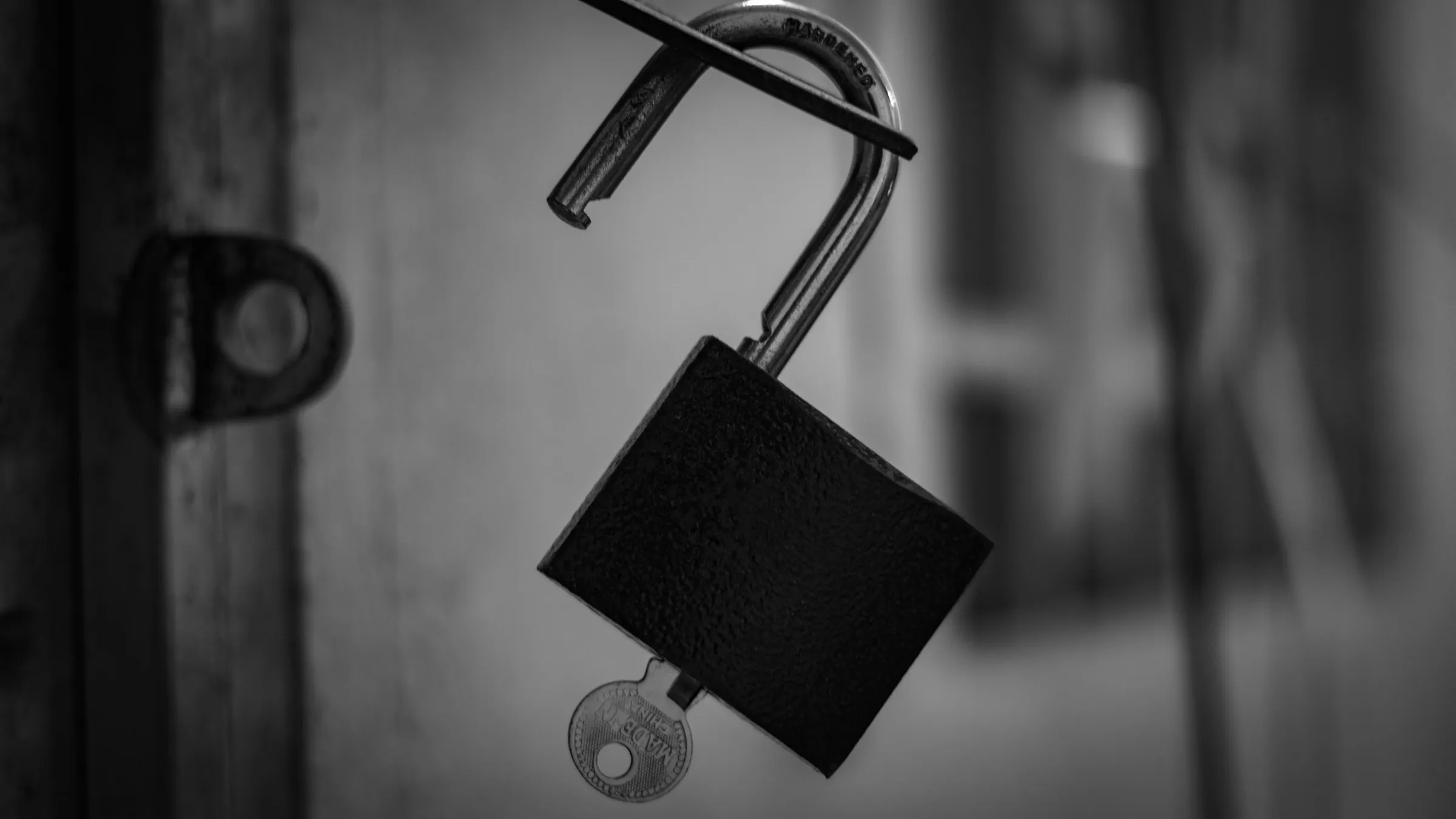
It used to be simple. You paid, you got the thing, the thing was yours. You could sell it, lend it, take a screwdriver to it, or use it for twenty years until it fell apart.
Today “Buy” means something else. You buy a licence to features the maker can switch off, move to a pricier tier, or put behind a monthly fee. Usually once you can no longer back out.
This isn’t a rant against subscriptions as such. I pay for a few and I’m fine with it. It’s about something sneakier: subscriptions bolted onto things you already bought, devices that stop working because a company decided so, and laws that make sure you can’t do anything about it.
Ownership that evaporated
Owning something used to come with a few obvious rights. You could resell it. You could lend it to a friend. You could fix it yourself or take it to the repair shop around the corner. You could modify it, even stupidly. Nobody asked for your permission, because the thing was yours.
The digital economy found a clever loophole: we don’t sell you a product, we license it to you. “Licensed, not sold” sits in terms nobody reads, and it changes everything. A licence can be revoked. A licence can forbid resale. A licence can change unilaterally, and you “accept the changes by continuing to use the service”.
What that looks like in practice:
- In July 2009 Amazon remotely deleted purchased copies of Orwell’s 1984 and Animal Farm from Kindles because the publisher didn’t hold the rights. It refunded buyers, and Jeff Bezos later called it “stupid”. Of all the books to pick, it had to be that one.
- On 26 February 2025 Amazon removed “Download & Transfer via USB”. Your ebooks didn’t disappear, but you can no longer download a copy to your own computer. Your library lives at Amazon, and only at Amazon.
- In 2023 Sony announced that about 1,300 seasons of Discovery shows would disappear from PlayStation users’ libraries, even though people had paid for them. It backed down only after a new licensing deal with Warner Bros. Discovery. Not because it was wrong, but because the lawyers happened to agree.
- Ubisoft shut down The Crew’s servers on 31 March 2024 and in early April revoked players’ licences in its launcher. A game people bought vanished from their libraries as if it had never been there.
The common thread: what you paid for exists only as long as someone else finds it profitable.
PlayStation says goodbye to discs
Sony wrote the latest chapter of this story. On 1 July 2026 it announced on its blog that from January 2028 it will stop producing discs for all new games on PlayStation consoles. New titles will be available “in digital formats only”. Games released on disc before then stay as they are.
The reasoning sounds sensible: according to Sony’s financial results, digital copies already make up about 85% of full-game sales on PS4 and PS5. Most people buy from the PlayStation Store anyway, so why press plastic.
Funnily enough, the announcement came days after GTA 6 fans found out that the game’s “physical” edition is a box with a download code inside. Cardboard for the shelf, so there’s something to look at, while the game itself lives on a server.
Why does it matter, if 85% already chose digital? Because the disc was the last kind of licence you could hold in your hand:
- You could resell it. The used-games market, swaps with friends, the secondhand shop. A game from the PlayStation Store can’t be sold or given away.
- You could lend it. To your brother, a friend, the neighbour’s kid. A digital account isn’t something you lend.
- Prices competed. Many shops sold the disc, so the price went down. When the only store is the one built into the console, whoever owns that store sets the price.
- It didn’t depend on a server. Not always fully, since more and more games need a day-one patch, but a disc doesn’t vanish from your shelf when a licensing deal expires.
And remember, this is the same Sony that in 2023 wanted to wipe purchased Discovery shows from people’s libraries. Now the whole games library will run on the same terms.
That 15% includes collectors, people with poor internet, and people who simply want to own what they paid for. In other words, exactly the people this change affects most.
The book that made me write this
Blame Cory Doctorow. His Enshittification: Why Everything Suddenly Got Worse and What to Do About It (2025) came out in Polish this August as „Gównowacenie”, which, trust me, sounds even better.
Doctorow first used the word in November 2022 on his blog, Pluralistic, and laid out the full theory in January 2023 in a piece about TikTok that Wired republished. The word took off faster than most startups: the American Dialect Society made it its word of the year for 2023, and Australia’s Macquarie Dictionary did the same for 2024.
He describes the pattern in four steps:
- A platform is good to its users, to lure them in.
- Once they’re locked in, it squeezes them for the benefit of its business customers: advertisers, sellers, publishers.
- Then it squeezes the business customers to keep all the value for itself.
- What’s left is something nobody likes and nobody can leave. Or it dies.
The most interesting part of the book, though, isn’t the diagnosis but the explanation of why this didn’t happen before. Doctorow argues that companies stayed in check while they feared four things: competition, regulators, users working around their locks, and their own workers. Over two decades Big Tech dismantled all four. It bought its competitors, outlasted its regulators, outlawed workarounds, and taught its workers that they’re replaceable.
A subscription for something you already bought is the same move, carried over from platforms to physical things.
Hall of fame
You don’t have to look far. Every one of these is real and well documented.
Software
- Adobe announced on 6 May 2013 that Creative Suite 6 would be the last version you could own. Photoshop and friends have been Creative Cloud-only ever since. Stop paying and you lose the tool, and your PSD files suddenly have nothing to open them. In June 2024 the US Department of Justice, on the FTC’s referral, sued Adobe over a hidden early termination fee on its “annual, paid monthly” plan (50% of what’s left of the year) and a deliberately painful cancellation process.
- Autodesk stopped selling perpetual licences for most of its desktop software on 1 February 2016.
- Microsoft bundled Copilot into Microsoft 365 Personal and Family in the US on 16 January 2025. Personal went from $69.99 to $99.99 a year, Family from $99.99 to $129.99. “Classic” plans without the AI stayed, but only for existing subscribers who knew where to look. Nobody asked whether you wanted AI. They asked whether you wanted to pay more, and answered for you.
- Unity announced a fee for every install of a game built on its engine on 12 September 2023, including games already released. A year later, after a developer revolt, it cancelled it. It’s Doctorow’s third step by the book: squeeze the business customers who are already locked in, because porting a game to another engine takes years.
Cars
- BMW sold, from 2020 and in a few markets including South Korea and the UK, a subscription for heated seats that were already physically in the car. In South Korea it came to about $18 a month. In September 2023 it backed down after the backlash, while promising that paid software features are here to stay.
- Mercedes offered US owners of the electric EQE and EQS faster acceleration for $1,200 a year in November 2022. In 2023 it cut the price to $600 and $900 a year and added monthly and lifetime options. Same motor; you just pay to be allowed to use it.
- Toyota made key-fob remote start on some cars depend on an $8-a-month subscription in 2021. The key fob. The one in your pocket.
- Tesla, as Jalopnik reported in 2020, ran an “audit” and remotely removed Enhanced Autopilot and FSD, about $8,000 worth of features, from a used Model S that Tesla itself had sold to a dealer. The new owner bought the car with those features and woke up without them. Tesla later restored them, calling it a “miscommunication”.
Printers
HP deserves its own section, because it says the quiet part out loud.
- In 2016 it pushed a firmware update with “dynamic security” that, from 13 September, started rejecting third-party ink cartridges. It reached about 3.5 million printers. The US class action settled with a $1.5 million fund and a promise not to reactivate the feature on those printers.
- With Instant Ink, the ink itself is a subscription. According to HP’s own FAQ, cartridges stop working when you cancel, even if they aren’t empty. The ink is physically in your printer, but it isn’t yours.
- In January 2024 HP’s CEO, Enrique Lores, told CNBC that the company’s “long-term objective is to make printing a subscription”, and that a customer who doesn’t buy HP ink is “a bad investment”.
Honest, at least. The printer is sold below cost, and you’re a financial product that has to pay it back.
Hardware that dies on command
- Revolv, a smart-home hub bought by Alphabet’s Nest, stopped working on 15 May 2016 when its servers were switched off. Buyers got refunds. The hubs got promoted to paperweights.
- Sonos’s Trade Up program, from late 2019, gave you a discount on a new speaker if you put the old one into “Recycle Mode”: a 21-day countdown to permanent bricking. Working speakers that could have played for someone else for years went straight to e-waste. Sonos dropped it in March 2020.
- Spotify switched off Car Thing on 9 December 2024, a car gadget people bought with their own money. At first with no refunds. Those appeared only after the outrage and a lawsuit.
- Peloton introduced a $95 “activation fee” for used equipment bought from someone else in August 2024. For a bike somebody had already paid for. The secondhand market got its own tax.
- Philips Hue announced in 2023 that its lighting app would require an account. For light bulbs. In your living room.
Subscriptions that rot on their own
Even an honest subscription, where you pay for an ongoing service, isn’t safe. The terms change halfway through:
- Amazon Prime Video started showing ads by default to paying subscribers on 29 January 2024. Going ad-free costs an extra $2.99 a month in the US. You pay for a subscription so you can pay extra on top of it.
- Netflix started charging US members $7.99 a month for each extra member outside the household in May 2023, after years of looking the other way on password sharing because it helped it grow.
The common thread of the whole gallery: what you bought works only as long and as well as the company that sold it to you wants it to.
Why it pays
Because investors love recurring revenue. A company that sells a product once has to win customers over every quarter. A company with subscriptions has a nice line in a spreadsheet that goes up on its own. The valuation rises, the CEO gets a bonus, and the customer gets an email saying “We’re updating our pricing to keep delivering even more value to you”.
A few simple mechanisms sit behind it:
- Hardware below cost, profit later. HP says it openly, and consoles and plenty of smart-home devices work the same way. If a maker loses money on the hardware, it has to keep you hooked afterwards, or its business model doesn’t add up.
- Switching costs. When your photos, files, workout history or ebook library live with one provider, leaving hurts. The more it hurts, the higher the price can go before you leave.
- Charging for what’s already there. BMW’s heated seats are the purest form of the idea. It’s cheaper to fit the same hardware to every car and unlock it for a fee than to build different versions. Unlocking costs nothing, so every dollar of the subscription is pure profit.
- Twiddling. Doctorow has a good word for this. Since the product talks to the maker’s servers, the rules can change at any moment: the price, the limits, what’s in the basic plan and what’s in “Pro”. Nothing changes on your side; the thing sits on your desk or in your garage. Everything changes on theirs, and every change can be A/B tested on you.
The nastiest part is that each step looks reasonable on its own. Five dollars here, an account there, “a minor update to our terms”. Only together do they add up to a picture in which you don’t own anything any more.
The law that guards the lock
A developer’s first thought: it’s just software, so work around it. Flash a different firmware, unlock the seats, hack the printer. Technically, that’s often possible. Legally, not necessarily.
In the US, Section 1201 of the DMCA prohibits circumventing technical protection measures (DRM) and trafficking in tools to do so, even when no copyright is infringed. Criminal trafficking can mean up to five years in prison and a $500,000 fine. Jay Freeman, the creator of Cydia, called this “felony contempt of business model”, and Doctorow popularised the phrase. It’s hard to put it better: you may not fix your own thing, because it would offend someone’s revenue plan.
In the EU, Article 6 of Directive 2001/29/EC gives similar protection to technical measures, so this isn’t only an American problem.
The best-known example is John Deere. A modern tractor is a computer on wheels, and repairing it needs diagnostic software that the maker long gave only to authorised dealers. Farmers spent years hacking their own tractors. In January 2025 the FTC, together with Illinois and Minnesota, sued Deere for monopolising repairs.
This is the third of Doctorow’s four missing forces. Once, if a maker did something stupid, someone released a workaround and the market corrected itself. Today the workaround may be illegal, so the stupidity can last forever.
When a subscription is fine
To be fair: not every subscription is evil. There are good reasons to pay regularly.
- Ongoing costs for the provider. Servers, bandwidth, storage, moderation. If someone spends money every day to keep a service running, a subscription is natural.
- Ongoing work. Security updates, new versions, support. Software nobody maintains rots.
- A lower barrier to entry. For a freelancer, $15 a month can be easier than a few hundred up front. That’s a real benefit, not just a marketing trick.
- A service, not a product. Music streaming, hosting, email, backups. Nobody sensible expects to buy those once and forever.
The line is fairly simple. A subscription is fine when you pay for something the provider does for you now and will keep doing. It stops being fine when you pay for something you already have: a heater in your seat, power in your motor, ink in your cartridge, a file on your disk, a game in your library.
The questions I ask myself:
- What exactly does the provider do each month for this money?
- What happens to what I already have if I stop paying?
- What happens if the company goes bust or changes its mind?
- Can I leave with my data?
If the answer to the first is “nothing” and to the second “everything stops working”, that’s not a subscription. It’s a ransom paid in instalments.
Why it annoys me as a developer
Because I know how it’s built. A paywalled feature is often a single if:
if (!user.plan.includes('heated-seats')) {
  return disable(seatHeater); // the heater's there, the power's there, the board's approval isn't
}
There’s no engineering reason behind it. The heater doesn’t wear out faster because someone didn’t pay. It’s a business decision dressed up as software. Someone had to write that if, someone approved it in code review, someone shipped it and monitors whether it works.
Remote kill switches look the same. On start-up, the device asks a server whether it’s allowed to run:
const license = await fetch('https://api.vendor.example/license').then((r) => r.json());
if (!license.active) brick(); // server down? brick anyway
All it takes is for the company to switch off that endpoint, go bust or forget to renew a domain, and hardware worth a small fortune becomes decoration.
It can be done decently. I sell licensed software myself, so I’ve thought about this more than I’d like. A few principles separate a fair model from a trap:
- Licences checked locally. A cryptographically signed licence file the app verifies on the spot, instead of asking a server on every launch.
- Graceful degradation. If the server doesn’t answer, the app keeps working instead of locking out a user who did nothing wrong.
- A right to the last version. Some companies, JetBrains for example, give subscribers a perpetual licence for the version they’ve already paid for. Stop paying and you lose updates, not the tool.
- Data in open formats. Users can leave with their files at any time.
- An end-of-life plan. If a product is ever shut down, the final update should set it free, not kill it.
My working rule: if something can be switched off remotely, sooner or later someone will switch it off. Or charge you to keep it on. That’s why developers are Doctorow’s fourth force. We write those ifs, and we can say in planning that it’s a bad idea. We won’t always win, but at least nobody can say they weren’t told.
Something is moving
So it’s not all bleak, a few things are going the right way.
- Backlash works. BMW dropped the seats, Sonos dropped Recycle Mode, Spotify started refunding Car Thing, Sony let people keep their Discovery shows, Unity cancelled its install fee. Every time, loud customer anger was behind it, and often a lawsuit.
- Right to repair in the EU. Directive (EU) 2024/1799 was adopted in June 2024, and member states had to implement it by 31 July 2026. Makers of some kinds of products must offer repairs after the warranty too, and may not obstruct independent repairers.
- Stop Killing Games. A European Citizens’ Initiative demanding that publishers can’t simply switch off games people bought gathered over 1.29 million verified signatures, so the European Commission has to deal with it formally. The spark was The Crew.
- Regulators are waking up, unevenly. In October 2024 the FTC adopted its “click to cancel” rule, requiring cancelling to be as easy as signing up. In July 2025 an appeals court vacated it on procedural grounds, days before it took effect. One step forward, one step back. But the lawsuits against Adobe and Deere show the topic is no longer niche.
What to do about it
As an ordinary person, you’re left with a few habits. They won’t save the world, but they’ll spare you some disappointment.
Before you buy hardware:
- Check that it works without an account and an app. If it doesn’t, you’re not buying a device, you’re buying a subscription in a plastic case.
- Find out what happens when the maker switches off its servers. If nobody knows, assume the worst.
- Check that it can be repaired: parts, manuals, independent repair shops.
- With cars, read which features are “forever” and which are a trial. The dealer rarely mentions it unprompted.
Before you buy software or content:
- Pick software that lets you export your data to an open format.
- Check whether a subscription comes with a perpetual licence for the last version you paid for.
- For ebooks, music and films, prefer stores that let you download DRM-free files, wherever that’s an option.
Before you click “Subscribe”:
- Check how to cancel. If it takes a phone call during business hours, you know everything about that company.
- Check whether an “annual, paid monthly” plan has an early termination fee.
- Set a reminder before the trial ends. They’re counting on you forgetting.
And more broadly:
- Root for the right to repair and initiatives like Stop Killing Games.
- Speak up when something bothers you. The list of abandoned ideas in this post shows companies listen when it gets loud.
- Pay the people who still sell things normally: once, to own.
Full disclosure
I sell software myself, so here goes: DevJourney costs $39, once, with no subscription. That’s not heroism, just a belief that you pay for a learning tool once, not every month for the rest of your life. If you don’t like it, you have 7 days to get a refund.
Does that pay better than a subscription? Probably not. But I’d rather sell things than rent people their own desks.
Because if I bought something, I want to own it. Not rent it, not “get access”, not “enjoy the experience”. Own it.